
Common Mistakes During Business Incorporation in the USA


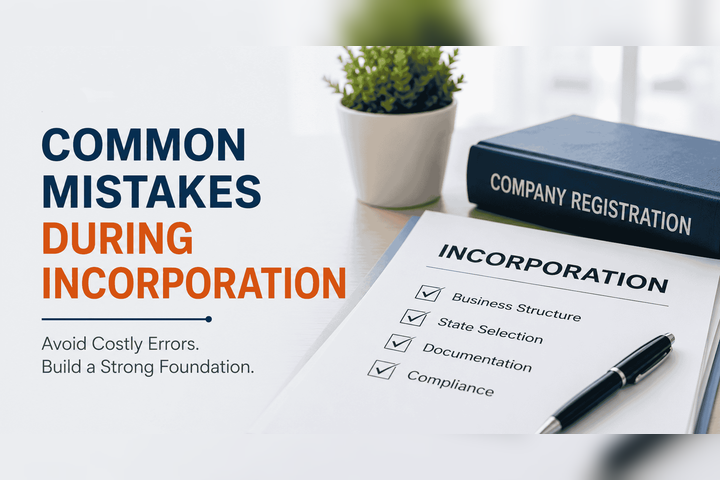
Starting a business is an exciting milestone, but business incorporation in the USA involves much more than simply filing paperwork with a state authority. Many entrepreneurs assume that company formation is just an administrative process, but overlooking important decisions during incorporation can create costly legal, tax, and compliance issues in the future.
Many startups do not struggle because they filed their incorporation documents incorrectly they struggle because they made the wrong structural decisions at the beginning. Selecting the wrong business entity, incorporating in the wrong state, delaying an EIN application, or maintaining poor corporate records can significantly impact a company's long-term success.
Whether you are a first-time entrepreneur, an investor, or an international business owner looking to start a business in the USA, understanding these common mistakes can help you build a strong legal and financial foundation.
In this article, we examine the most common business incorporation mistakes and explain how to avoid them.
Selecting the Wrong Business Structure
Choosing the appropriate legal entity is one of the most important decisions during business incorporation. The structure you select determines how your company will be taxed, managed, and protected from personal liability.
Many entrepreneurs choose an entity based on advice from friends, online forums, or social media rather than evaluating their own business objectives.
Common business structures include:
- Limited Liability Company (LLC)
- C Corporation
- S Corporation
- Partnership
- Sole Proprietorship
Choosing the wrong entity can lead to:
- Higher tax liability
- Increased administrative burden
- Restrictions on ownership and investment
- Difficulty raising capital
- Expensive restructuring in the future
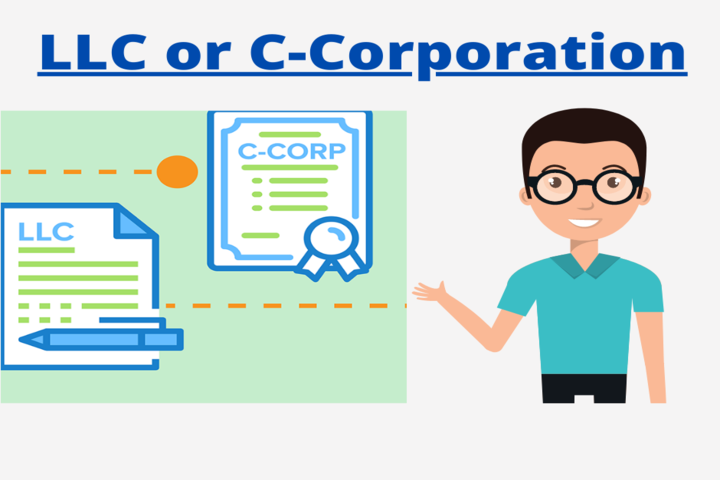
Before choosing between an LLC vs Corporation, evaluate your taxation requirements, ownership plans, fundraising goals, operational flexibility, and long-term business strategy.
Registering Your Business in the Wrong State
Many founders assume they should automatically register their company in the state where they live. Others believe incorporating in Delaware or Wyoming is always the best choice.
In reality, the best state depends on your business activities, future expansion plans, tax considerations, and compliance requirements.
Selecting the wrong jurisdiction may result in:
- Higher annual filing fees
- Increased ongoing compliance costs
- Additional state registrations
- Greater disclosure requirements
- More complex future restructuring
Choosing the appropriate state is an important part of successful company formation and should align with your long-term business objectives.
Selecting a Company Name Without Proper Due Diligence
Your company name is much more than a legal identifier—it is one of your most valuable business assets.
A name that appears available may still conflict with existing trademarks, registered businesses, or website domains.
Before registering your company, verify:
- State business name availability
- Federal trademark registrations
- Domain name availability
- Social media usernames
Failing to perform proper research may result in:
- Rejected incorporation applications
- Trademark disputes
- Costly rebranding
- Customer confusion
A strong business name builds credibility, strengthens marketing, and improves customer trust.
Submitting Inaccurate Formation Documents
Your incorporation documents establish the legal identity of your company.
Banks, investors, tax authorities, and government agencies rely on the information contained in these records.
Common filing mistakes include:
- Incorrect ownership percentages
- Misspelled names
- Wrong business addresses
- Incorrect registered agent information
- Missing shareholder or member details
Although these errors may appear minor initially, correcting them often requires amendment filings, legal expenses, administrative delays, and possible tax implications.
Accurate documentation is essential for successful business incorporation in the USA.
Delaying Your EIN Application
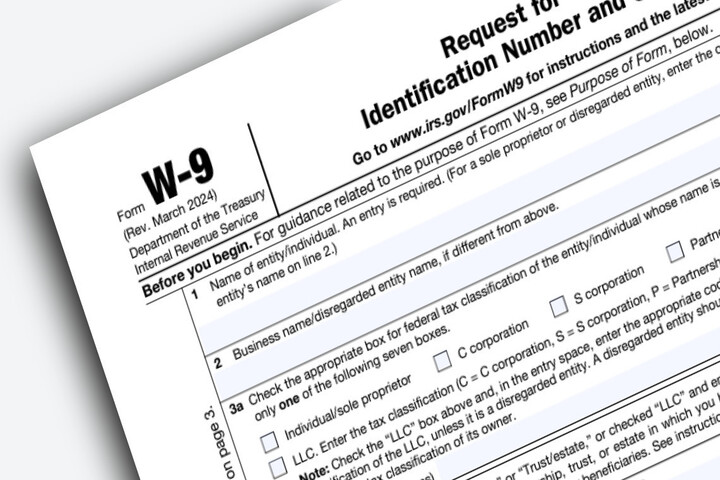
Obtaining an Employer Identification Number (EIN) is one of the most important steps after incorporating your business.
While incorporation creates the legal entity, an EIN allows the company to operate.
Without an EIN, businesses often experience:
- Delays opening business bank accounts
- Difficulty hiring employees
- Problems processing payments
- Tax filing complications
- Vendor onboarding delays
Submitting your EIN application immediately after incorporation helps ensure your business becomes operational without unnecessary delays.
Poor Corporate Record-Keeping
Strong companies distinguish themselves through effective governance and documentation.
Corporate records provide legal evidence of ownership, decision-making, and compliance.
Essential records include:
- Articles of Incorporation
- Operating Agreements
- Corporate Bylaws
- Shareholder records
- Meeting minutes
- Stock certificates
- Tax registrations
- Annual reports
Poor documentation may lead to:
- Compliance violations
- Difficulties during audits
- Investor concerns
- Banking challenges
- Legal disputes
Maintaining organized records demonstrates professionalism and strengthens confidence among investors, lenders, and business partners.
How Braj Aggarwal, CPA, P.C. Can Help
Starting a business involves much more than filing incorporation documents. At Braj Aggarwal, CPA, P.C, we provide comprehensive business formation services, helping entrepreneurs, startups, investors, and international business owners establish companies that are structured for long-term success.
Our experienced professionals assist clients with every stage of the business incorporation process, including:
- Business entity selection (LLC, C Corporation, S Corporation, Partnership)
- Guidance on LLC vs Corporation decisions
- State selection based on tax and operational considerations
- Company formation and registration
- EIN application assistance
- Corporate compliance guidance
- Shareholder and ownership structuring
- Business tax planning
- Bookkeeping and accounting setup
- Payroll services
- Ongoing CPA advisory services
- Assistance for non-U.S. residents looking to start a business in the USA
Rather than simply helping you register a business, we help ensure your company is established on a solid legal, tax, and financial foundation. Our goal is to help you avoid costly incorporation mistakes while positioning your business for sustainable growth.
Frequently Asked Questions (FAQs)
What is the biggest mistake during business incorporation?
Choosing the wrong business structure without considering taxation, ownership, fundraising, and future growth is one of the most common incorporation mistakes.
Should I form an LLC or a Corporation?
The answer depends on your business objectives, tax planning, ownership structure, and investment goals. Consulting a CPA before deciding between an LLC vs Corporation can help you make the right choice.
Do I need an EIN immediately after incorporation?
Yes. An EIN is required to open business bank accounts, hire employees, file taxes, and establish business relationships with vendors and payment processors.
Can I change my business structure later?
Yes, but changing your entity may involve additional filings, legal costs, tax implications, and administrative work.
What records should I maintain after incorporating my business?
Maintain Articles of Incorporation, Operating Agreements, shareholder records, meeting minutes, stock certificates, tax registrations, and annual compliance records.
Can non-U.S. residents incorporate a company in the United States?
Yes. Non-U.S. residents can establish a U.S. business entity, although careful planning regarding entity selection, taxation, banking, and compliance is essential.
Why should I work with a CPA during business incorporation?
A CPA helps ensure your business is structured correctly from the beginning, minimizing tax liabilities, improving compliance, and avoiding costly mistakes that can affect future growth.
Conclusion
Business incorporation in the USA is much more than filing paperwork it is the foundation of your company's future. The decisions made during incorporation can significantly influence taxation, legal protection, financing opportunities, compliance obligations, and long-term profitability.
By selecting the appropriate business structure, choosing the right state, preparing accurate incorporation documents, obtaining your EIN, and maintaining proper corporate records, you can avoid many of the most common business incorporation mistakes.
At Braj Aggarwal, CPA, P.C., we provide professional business incorporation services, company formation services, tax planning, accounting, and advisory support for startups, entrepreneurs, and international business owners. Whether you are planning to start a business in the USA or want to ensure your existing business is structured correctly, our experienced CPA team can guide you every step of the way.
Contact Braj Aggarwal, CPA, P.C. today and let us help you build your business on a strong legal, financial, and tax foundation.