
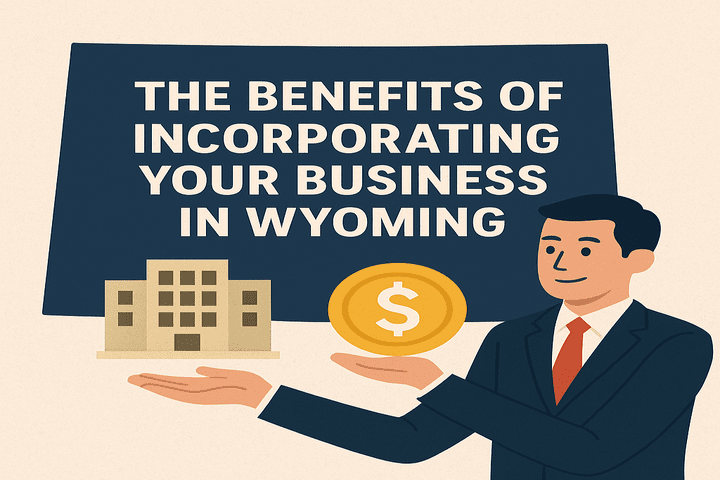
A Smart Tax Move: The Benefits of Incorporating Your Business in Wyoming

If you're a business owner or an aspiring entrepreneur, you've likely heard the whispers of Wyoming as a "business-friendly" state. But what does that really mean, and is it a myth or a powerful reality that can supercharge your company's growth? The truth is, when it comes to incorporating a business, Wyoming offers a unique and compelling set of advantages that are hard to beat, especially for small to mid-sized companies, startups, and those operating online.
Wyoming’s approach to business law is a game-changer. It’s a place where privacy, asset protection, and minimal red tape aren't just buzzwords. They're the foundation of the state's legal framework. From sole proprietors to complex holding companies, here are ten reasons why incorporating in Wyoming might be the smartest move you'll ever make for your business.
Here are 10 compelling reasons why you should consider making Wyoming the legal home for your business.
1. A Tax Haven for Entrepreneurs
Wyoming is famous for its lack of a state income tax, which applies to both personal and corporate income. This means more money stays in your pocket, ready to be reinvested into your business. There are also no franchise taxes, no inventory taxes, and the lowest sales and property taxes in the country. This friendly tax climate is a massive advantage, especially for e-commerce and service-based businesses.
2. The Gold Standard for Asset Protection
Wyoming has some of the strongest asset protection laws in the nation. It was the first state to authorize the creation of a Limited Liability Company (LLC), and its laws are designed to shield business owners from personal liability. This means that in most cases, your personal assets—like your home and savings—are protected from business debts and lawsuits. This is a critical layer of security for any entrepreneur.
3. Unmatched Privacy and Anonymity
One of Wyoming's most attractive features is its commitment to business privacy. When you form an LLC or corporation here, the names of members, managers, officers, and directors are not required to be listed on the public record. This is a significant departure from many other states that demand a high degree of public disclosure. By using a registered agent, you can maintain a level of privacy that few other jurisdictions offer.
4. Simplified Corporate Formalities
Wyoming keeps corporate red tape to a minimum. Unlike other states that require burdensome annual meetings and extensive paperwork, Wyoming's requirements are simple and straightforward. This saves you time and money, allowing you to focus on what really matters: growing your business.
5. Affordable and Easy to Maintain
The cost of forming and maintaining a business in Wyoming is remarkably low. The initial filing fee is affordable, and the annual report fee is minimal. Most businesses with assets under a certain threshold pay a small flat fee, making it one of the most cost-effective states for business ownership.
6. No Minimum Capitalization Requirement
You don't need to be a millionaire to start a business in Wyoming. The state does not have a minimum capitalization requirement, meaning you can fund your company with any amount you choose, from a few dollars to a few million. This flexibility makes it accessible to entrepreneurs at any stage of their journey.
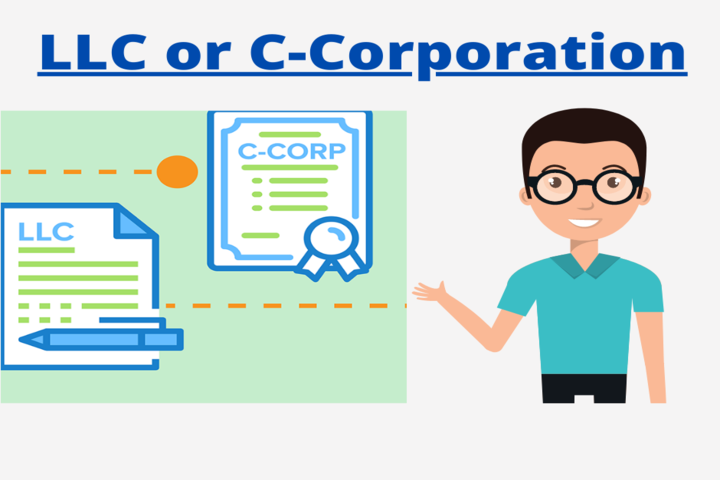
7. Flexibility for C-Corporations
For those forming a C-corporation, Wyoming offers the unique advantage of unlimited stock issuance without additional fees. This provides incredible flexibility for businesses that plan to grow, seek investors, or potentially go public in the future.
8. No Residency Requirements
You don't have to be a resident of Wyoming or even a U.S. citizen to form a business there. This makes it an ideal choice for international entrepreneurs and business owners who reside in other states but want to take advantage of Wyoming's favorable business environment.
9. The Benefit of a Registered Agent
Wyoming requires all businesses to have a registered agent with a physical street address in the state. This is a simple and effective way to ensure that all legal and state documents are received and handled properly. It also serves as another layer of privacy, as the registered agent's address, not yours, is listed on the public record.
10. A Reputation of Business-Friendliness
Wyoming has been consistently ranked as one of the most business-friendly states in the U.S. Its legal framework is built to support and protect entrepreneurs, not to burden them. This reputation attracts a wide range of businesses, from startups to large corporations, creating a strong and supportive ecosystem.
Frequently Asked Questions (FAQs)
Do I have to live in Wyoming to incorporate my business there?
No, you do not. Wyoming has no residency requirements for business owners. However, you will need to appoint a Registered Agent who has a physical address in Wyoming to receive official legal and government correspondence on your behalf.
What is a Registered Agent and why do I need one?
A Registered Agent is a designated individual or company with a physical address in Wyoming who receives official legal and tax documents on behalf of your business. All businesses, regardless of where the owners live, are required by law to have a Registered Agent in the state of incorporation.
Can incorporating in Wyoming help me save on taxes in my home state?
This is a common misconception. While Wyoming has no state income tax, your business is still required to pay taxes in the state where it transacts business. For example, if you live in New York and your business operates there, you will still be subject to New York's state income taxes. The tax benefits of a Wyoming entity are most realized for the income that is retained within the corporation. It is crucial to consult with a tax professional to understand your specific tax obligations.
Is a Wyoming LLC better than a Delaware LLC?
For many small to medium-sized and privately held businesses, a Wyoming LLC is often the better choice due to its superior privacy protections, lower annual fees, and strong asset protection laws. Delaware is often favored by large corporations and those planning a public offering due to its well-established body of corporate case law. The best choice depends on your specific business goals and needs.
What are the main steps to incorporate my business in Wyoming?
The main steps include choosing a unique business name, appointing a Wyoming Registered Agent, and filing your Articles of Organization (for an LLC) or Articles of Incorporation (for a corporation) with the Wyoming Secretary of State. While the process is straightforward, consulting a professional can ensure all legal requirements are met correctly.
How Braj Aggarwal CPA PC Can Help Indian Businesses in the USA
As an entrepreneur, especially one navigating a new country, having the right financial partner is non-negotiable. For Indian business owners in the USA looking for a Desi CPA in New York, Braj Aggarwal CPA PC offers a unique and invaluable set of services.
With a deep understanding of both the Indian and American financial landscapes, Braj Aggarwal and his team provide tailored solutions that address the specific needs and challenges faced by Indian businesses. They can guide you through the entire process, from setting up your business and choosing the right structure, to handling complex tax and accounting matters. Their services include company setup for non-residents, outsourced accounting and bookkeeping, tax planning, and payroll processing.
By choosing Braj Aggarwal CPA PC, you’re not just getting an accountant you're gaining a partner who understands your cultural background, speaks your language, and is dedicated to your financial success. They can help you navigate the complexities of U.S. business regulations, ensuring you remain compliant and focused on what you do best growing your business.